
Suffering from dry skin, scratchy clothes, or appliances that are always up for repair or replacement? The real issue could be hard water. Water softeners are lifesavers in these situations, but what keeps them working their best? Salt.
This simple addition helps your system remove minerals like calcium and magnesium. These elements are behind hard water that’s causing you trouble. Without salt, your water softener can’t do its job properly, and you’re back to dealing with those everyday problems.
Learn how salt gives your water softener the power to combat hard water, along with tips and advice from the Water treatment experts at Casco Plumbing!
What Does the Salt Do in a Water Softener?
The Science Behind Water Softening
The secret lies in the ion exchange process that happens when salt comes into contact with the target elements. Salt in the water softener releases sodium ions that swap places with calcium and magnesium in hard water.
The Role of the Brine Tank
What’s a brine tank? Think of it as the salt reserve. It feeds the salt solution into the system to refresh the resin beads during regeneration.
What is Water Softener Salt?
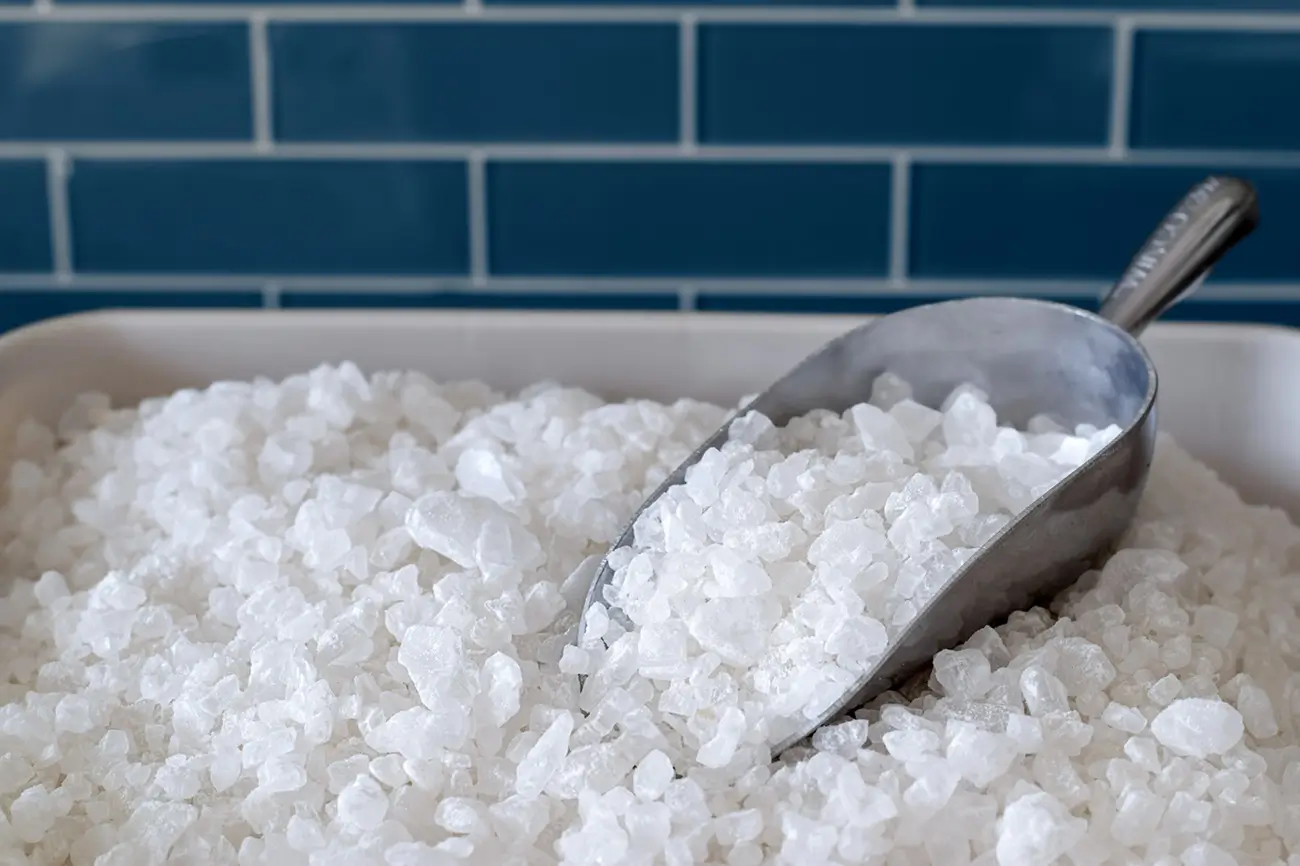
There are different types of water softener salt, including solar salt, rock salt, and evaporated salt. Solar salt is made by evaporating seawater and is often a purer option that dissolves well. Rock salt is more natural but may contain more impurities that can cause buildup in your brine tank.
How Does Salt Soften Water?
The Regeneration Cycle
Ever wondered how your water softener keeps working without missing a beat? The regeneration cycle is behind it all. This is when the brine tank sends a saltwater solution through the softener’s resin beads to wash away the build-up of hard minerals like calcium and magnesium. It’s the reset button to keep the beads capable of catching more minerals and keeping your water soft.
The Impact on Water Hardness
This process doesn’t just improve water quality. Water softening using salt also protects your home with fewer pipe clogs, extends the life of your appliances, and ensures your system continues running efficiently with water softener repair when needed!
Common Questions About Salt in Water Softeners
How Much Salt Goes in a Water Softener?
Always keep your brine tank at least a quarter full. It’s like fueling up a car. You can’t expect it to run without fuel.
What Happens if My Water Softener Runs Out of Salt?
If the salt runs out, your water softener will lose its power to deal with hard minerals. Hard water will rush in. This will cause limescale in your pipes, dull your clothes, and make your skin feel dry and irritated.
Does a Water Softener Make Water Salty?
No, your water shouldn’t taste salty. The salt helps clean and recharge the softener’s resin but doesn’t end up in the water you drink.
What’s the Risk of Not Putting Salt in Your Water Softener?
Without salt, you’re looking at clogged pipes, chalky buildup on faucets, and appliances that wear out faster than they should. Not to mention the effect it will have on your skin and overall health.
How to Maintain the Right Salt Levels
Monitoring and Refilling the Brine Tank
Make sure to give your brine tank a monthly check-up. If the salt level is below a quarter full, it’s time to add more. Be sure to check that the salt doesn’t form a hard crust or a salt bridge on top!
How Much Salt Do I Put in My Water Softener?
Aim to keep the tank half-full to two-thirds full, refilling before it drops below a quarter. Avoid filling it to the brim to prevent salt clumping.
Water Filtration: Salted Right, Softened Perfectly with Casco Plumbing
Spots on dishes, rough clothes, and dry skin—sound familiar? Give your water softener the power to combat those problems with salt!
Salt fuels the ion exchange process that pulls calcium and magnesium from your water to give you the soft water your home deserves! Keep watch of your salt levels. Too low, and you’re back to mineral buildup and that sticky feeling in the shower.
If you’re not sure where to start or if maintenance seems overwhelming, call Casco Plumbing! We are ready to help you with water softener checks, installations, and maintenance. For questions or assistance, reach out at 540-773-8076 or email fixyerplumbing@gmail.com.